15. Git stats, part 2: bring numbers to your 1:1
"I'm overloaded" is hard to act on. "My PRs wait 4.3 hours for a first review, up from 3.5" is easy. How to bring facts to a 1:1.
This post shows how to use your git numbers in a 1:1.
I run 1:1s every week. The most common answer I get is “fine, busy”. Then a month later I learn that the person was tired and stuck. I can’t fix “busy”. I can fix “my PRs wait 4 hours for a review”.
Part 1 was about the yearly review. This part is about problems in the team process: slow reviews, too many reviews, work on weekends. You can’t see them until someone brings a number.
The problem
A problem without a number is easy to skip:
- It sounds personal. “Reviews are slow” sounds like “my teammates are lazy”.
- It is easy to close. “Everyone is busy now.” Topic over.
- Your manager can’t pass it up. I can’t take your feeling to my boss. I can take a number.
So don’t stop talking about problems. Change the form:
- What. What the data shows. No names.
- Number. This period and the one before.
- Cost. What it costs you or the team.
- Ask. One question or one idea.
Below are four cases. The screenshots come from ShowOffer, a tool I built. All data is made up.
Case 1: your PRs wait
You open a PR and wait. You start something else. The review comes, and you have to remember what the PR was about. The switch costs more than the wait.
The number: time to first review. The median time from opening a PR to the first review.
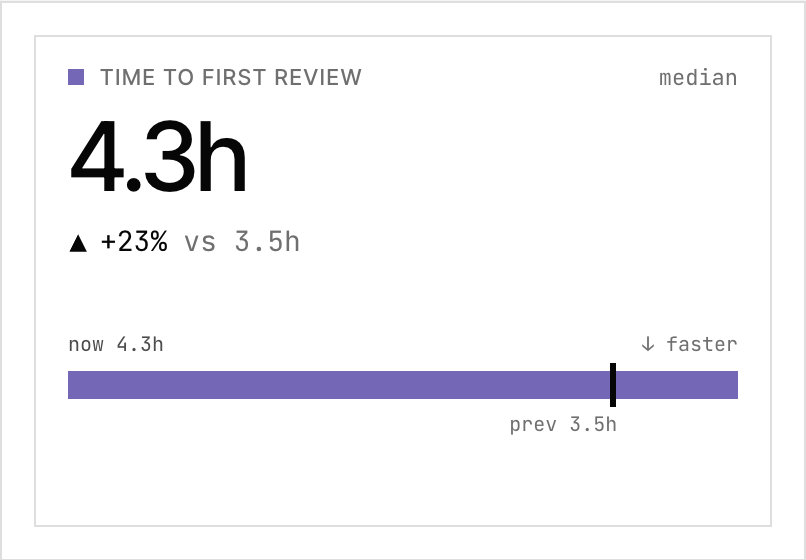
The wait went from 3.5 to 4.3 hours. 23% slower. I like the median here: one PR that waited a week does not change it much. When the median moves, most PRs moved.
Add time to merge:
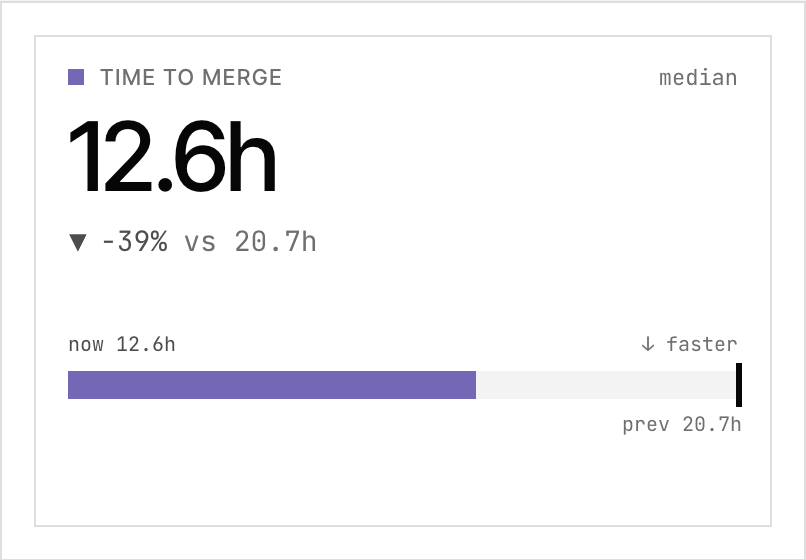
Time to merge went down, from 20.7 to 12.6 hours. So when someone starts the review, the PR moves fast. The time is lost at the start. The problem is attention, not review rounds. If it was the other way (fast first review, slow merge), talk about PR size and review rounds.
What to say:
“My PRs wait about 4.3 hours for a first review now. Last quarter it was 3.5. While I wait, I start too many things. Can we try a review slot after standup?”
No names. You don’t say who is slow. You say the process got slower. That is easy to fix.
Two limits:
- The hours include nights and weekends. A PR opened on Friday evening looks slow.
- The clock starts when the PR opens. If you open draft PRs early, the number looks worse than it is.
Case 2: you do most of the reviews
You are the person everyone tags. It feels good at first. Then your own work slows down, and nobody sees why.
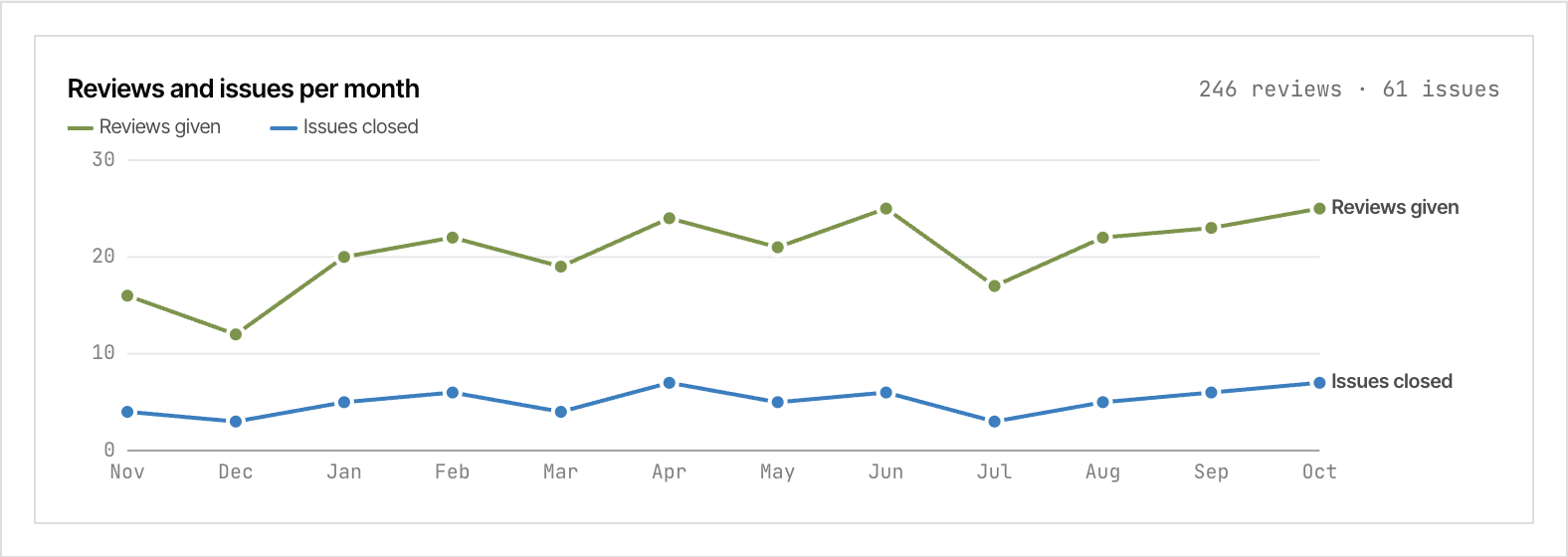
Reviews went from 12 in December to 25 in October. Two times more. At 20–30 minutes per review, that is many extra hours every month.
Now look at where the reviews go:
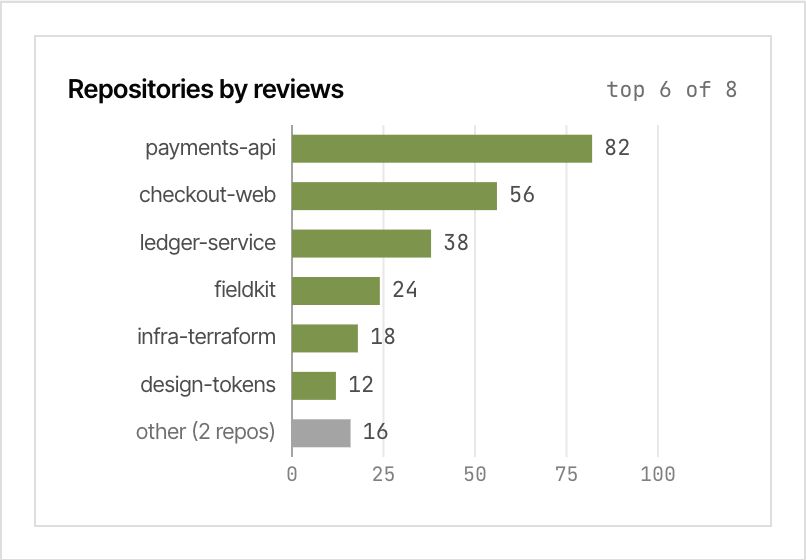
One repo takes a third of all reviews. Often this means you are the only person who knows that code. That is a risk for the team. When you go on holiday, those PRs wait.
And how do you review?
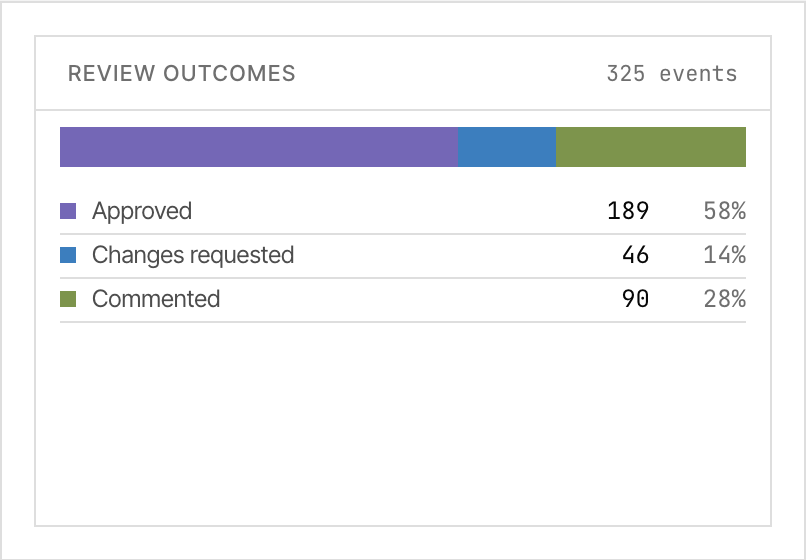
58% approved, 42% with comments or change requests. These are real reviews, not a quick “LGTM”. Each one takes time.
What to say:
“I reviewed 25 PRs last month, two times more than in December. A third are in payments-api, where I am the main reviewer. My own PRs are late. Can we add a second owner for payments-api? I can pair with them for a few weeks.”
This is the best kind of ask: a problem and a fix. Your manager can say yes in the same meeting.
One detail: the monthly chart counts PRs. The outcome chart counts review events. One PR with three rounds counts once in the first and three times in the second.
Case 3: you work on weekends
Hard to say out loud. “I work too much” sounds like bragging or like weakness. A picture says it calmly.
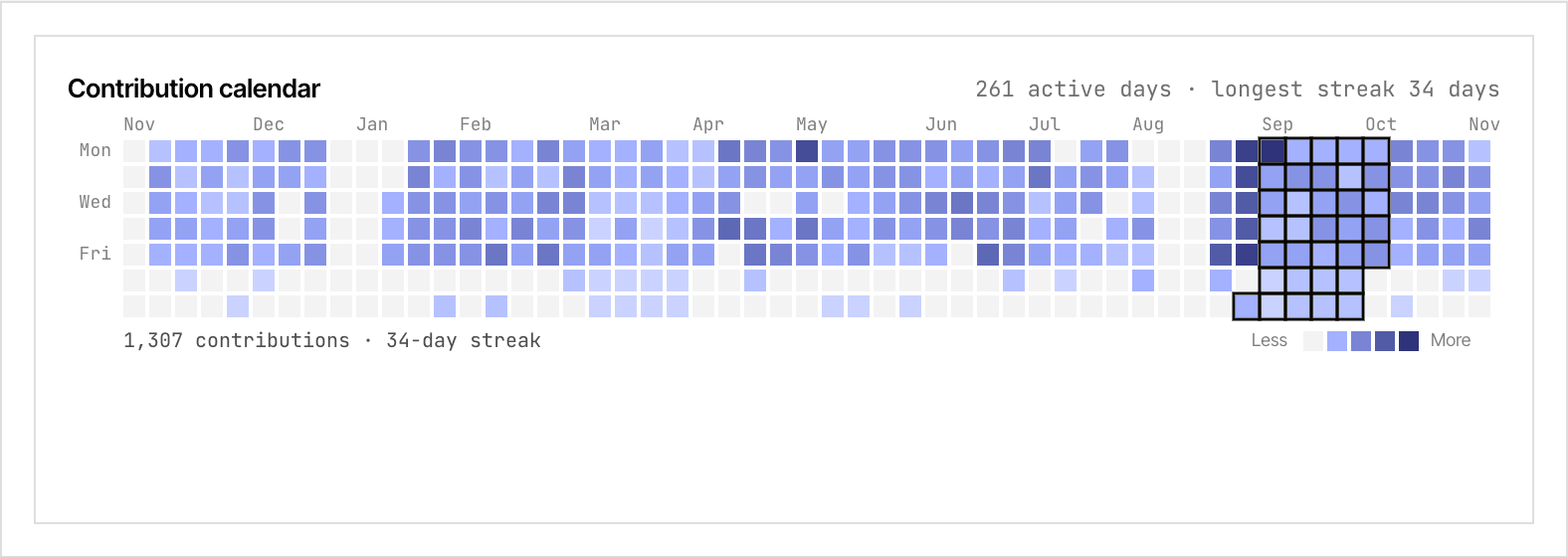
The bottom two rows are Saturday and Sunday. Most of the year they are empty. In March, April and September they are full. The marked block is a 34-day streak: 34 days in a row with code, no day off.
A long streak is not a medal. It means you worked every weekend for a month. Talk about it early, before you burn out.
What to say:
“In September I committed every day for 34 days, weekends too. That was the release. I don’t want this to be normal. Can we look at why it happened and plan the next release with more time?”
Limits:
- The calendar counts all GitHub activity, side projects too. If you code on weekends for fun, say so and look only at work repos.
- A commit is not an hour. One Sunday commit can be ten minutes.
Case 4: busy, but no PRs
The quiet problem. You work every day, but your PR count fell. You feel you did nothing, and you think your manager thinks so too.
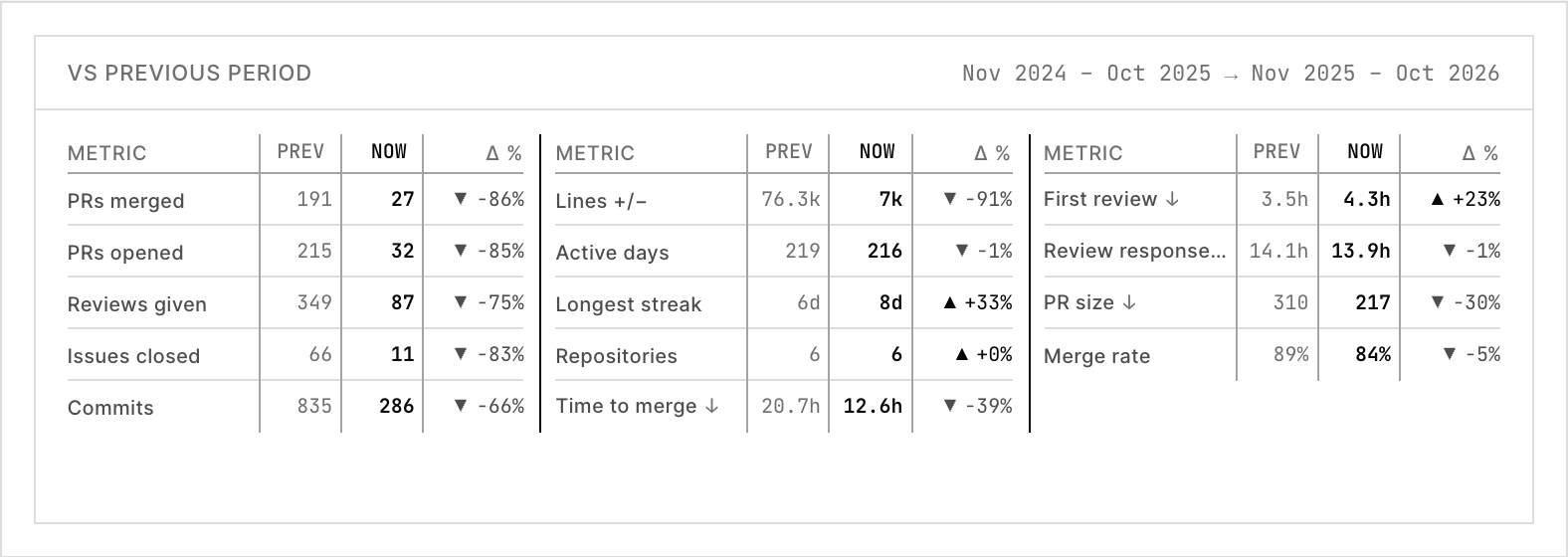
A different made-up engineer. PRs merged: down 86%. Reviews: down 75%. Bad? Look at one more row: active days down only 1%. This person worked almost every day. The time went somewhere else.
Where? Git doesn’t know. You do: meetings, support, interviews, a reorg, an incident, a design doc.
What to say:
“My merged PRs dropped a lot this quarter, but I worked almost every day. Most of my time went to interviews and support. Is that the right priority? If yes, can we add it to my goals? If no, what do I stop?”
You talk about the drop first, with the reason. You don’t wait for someone to find it at review time.
Keep it fair
- Talk about the process, not people. Never bring a chart that ranks your teammates. When numbers become a weapon, people start to game them.
- Bring two periods. “4.3 hours” is a fact. “4.3, up from 3.5” is a trend.
- One ask per topic. Ten problems feel like an attack. One problem with one idea feels like help.
- Listen. Maybe reviews are slow because two people left. Your number starts the talk. Your manager may know the rest.
One page every month
Don’t wait for a crisis. Once a month, five minutes before your 1:1:
- Open the report generator. Pick the last month or quarter. Turn on compare with the previous period.
- Keep only the widgets for your topic: first review, merge time, reviews per month, calendar.
- Download one PNG. Put it in your 1:1 doc.
For one sprint, use the number tiles. Charts group by month, so they need a quarter to show something.
It runs in your browser. The token stays in memory and goes only to api.github.com. It reads stats, never your code.
After a year you have twelve pages. That is part 1 for free.
Note
All engineers and numbers in the images are made up. I built ShowOffer, so I am not neutral. The method works with any numbers: GitHub search, team dashboards, a spreadsheet.
Next week, part 3: goals.
GitHub · LinkedIn · Dev.to · Substack · 4thwithme.dev/blog
May the --force be with you.